


Bronze Age Village Revealed Beneath Italian Lake, Offering a Glimpse into Lives from 3,000 Years Ago
 By
Nomvula Dlamini
By
Nomvula Dlamini
| IN A NUTSHELL |
|
Archaeologists have uncovered a fascinating glimpse into the past at Lake Mezzano in Italy. Beneath its serene waters lies a submerged Bronze Age village, providing insights into a community that thrived over 3,000 years ago. The discovery, marked by over 600 wooden posts from an ancient stilt settlement, has sparked interest among historians and archaeologists alike. This site, preserved by layers of clay and volcanic activity, is shedding light on the daily lives, craftsmanship, and possible demise of its inhabitants. As researchers continue their work, each artifact and structural remnant tells a unique story about life during this distant era.
A Village on Stilts: Reconstructing a Submerged Past
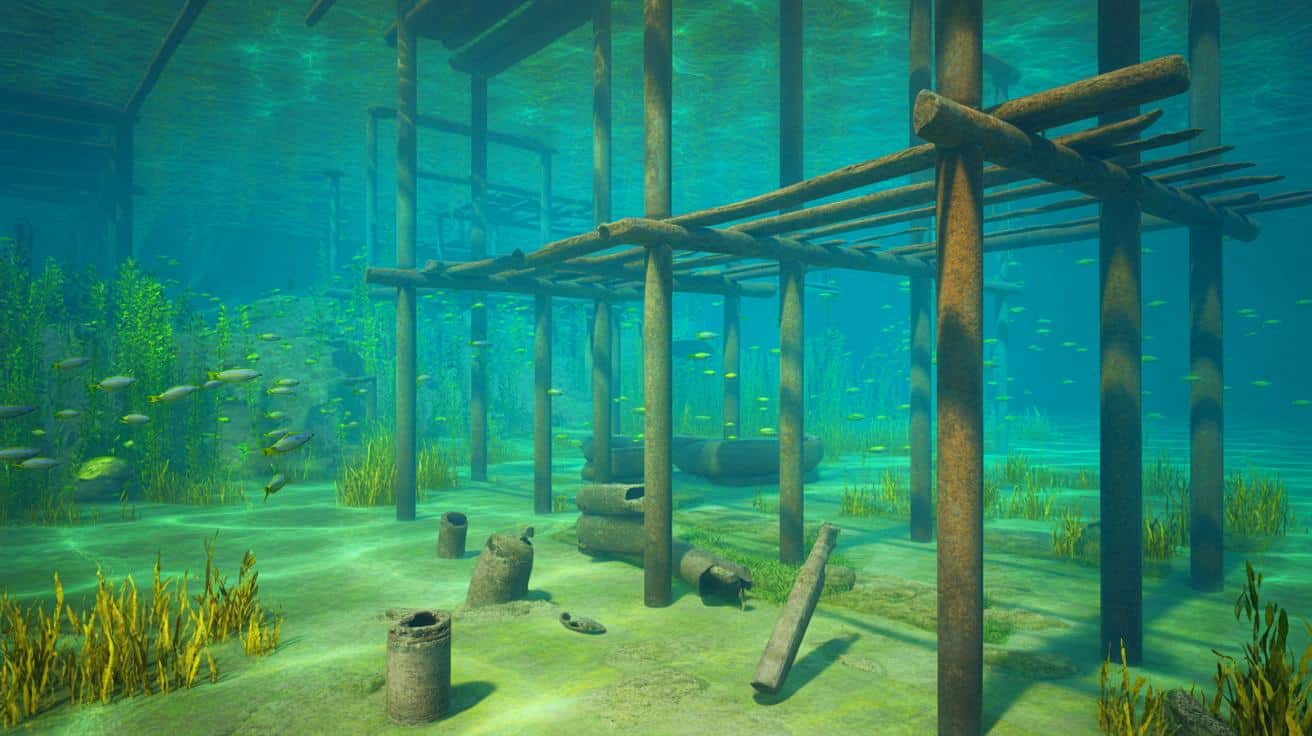
Deep beneath Lake Mezzano, near the town of Valentano in Lazio, archaeologists are piecing together the story of a Bronze Age village that once stood on stilts. Known as a pile-dwelling, this settlement was constructed on wooden platforms supported by vertical posts. The recent mapping of over 600 posts has revealed much about the village’s layout and construction methods. These posts, some submerged as deep as 32 feet, indicate fluctuations in the lake’s water levels over centuries. Such findings suggest that the villagers had to adapt to shifting environmental conditions, possibly driven by geological or climatic changes.
The excavation team, employing underwater suction hoses, has been meticulously removing sediment to uncover the village’s foundations. This process is allowing researchers to visualize the structural integrity of the stilt village, which has remarkably withstood the test of time. The site, located in a volcanic basin, offers a unique opportunity to study how ancient communities interacted with their environment. These findings not only enhance our understanding of Bronze Age architecture but also raise intriguing questions about the community’s resilience to natural challenges.
Weapons, Fire, and Craftsmanship: Unearthing the Tools of Daily Life
The excavation has also uncovered a treasure trove of bronze artifacts, offering a window into the daily lives of the village’s inhabitants. More than 25 items, including axes, spearheads, brooches, and sickles, have been found in remarkable condition. These artifacts are not only utilitarian but also display the decorative metalwork skills of the time. The presence of these items suggests that the village was a hub of metallurgical activity, with workshops dedicated to crafting tools and ornaments. This challenges previous perceptions of the village as merely a quaint lakeside community.
Some of the bronze objects show signs of fire damage, hinting at a dramatic event in the village’s history. Scattered lava stones and charred remains suggest that either a fire or a volcanic landslide may have contributed to the village’s destruction. These remnants paint a picture of a community in crisis, perhaps forced to abandon their homes in haste. Whether these events were isolated incidents or part of a larger pattern of volcanic activity remains a subject of further investigation.
Layered Sediment, Layered History
The lakebed’s thick clay layer has played a crucial role in preserving this ancient site. Acting like a natural time capsule, the sediment has protected cultural deposits from the ravages of time. Archaeologists have focused their efforts on areas where these deposits remain intact, revealing stone arrangements at the base of wooden posts. These stones likely served to stabilize the structures, offering insights into the villagers’ engineering prowess. Such findings demonstrate the community’s ability to adapt their architectural techniques to withstand environmental pressures.
The ongoing work by the Soprintendenza per le province di Viterbo e l’Etruria Meridionale is crucial to documenting and preserving this unique archaeological site. The discoveries made during the first 2025 campaign are laying the groundwork for future research. As the team continues to unearth the village’s secrets, they are contributing to a broader understanding of how ancient societies interacted with their environment and how nature ultimately reclaimed their settlements.
A Living Lab for Submerged Archaeology
Lake Mezzano is becoming an important site for submerged archaeology, offering a living laboratory for interdisciplinary research. By combining underwater exploration with sediment analysis and environmental reconstruction, scholars are gaining valuable insights into the lives of Bronze Age lake dwellers. The site serves as a case study for understanding how ancient communities adapted to their surroundings and the events that may have led to their downfall.
Future excavation campaigns aim to expand the research area and refine the dating of different occupation layers. Researchers hope to build a more accurate reconstruction of the settlement’s layout and determine the exact causes of its abandonment. Whether volcanic activity, flooding, or fire played a role remains to be conclusively established. Each new discovery adds to the narrative of a vibrant community that thrived beneath the waters of a volcanic lake.
The discovery of the submerged village at Lake Mezzano offers a rare glimpse into a bygone era, providing insights into the complexities of Bronze Age life. As archaeologists continue their work, the site holds the promise of further revelations about how ancient communities lived and interacted with their environment. What other secrets might the depths of Lake Mezzano hold, waiting to be uncovered by the diligent efforts of researchers?
Continue reading