


Scientists Discover Ecosystem Thriving Around Deep-Sea Giant, Revealing New Insights Into Marine Biodiversity
 By
Kwame Asante
By
Kwame Asante
| IN A NUTSHELL |
|
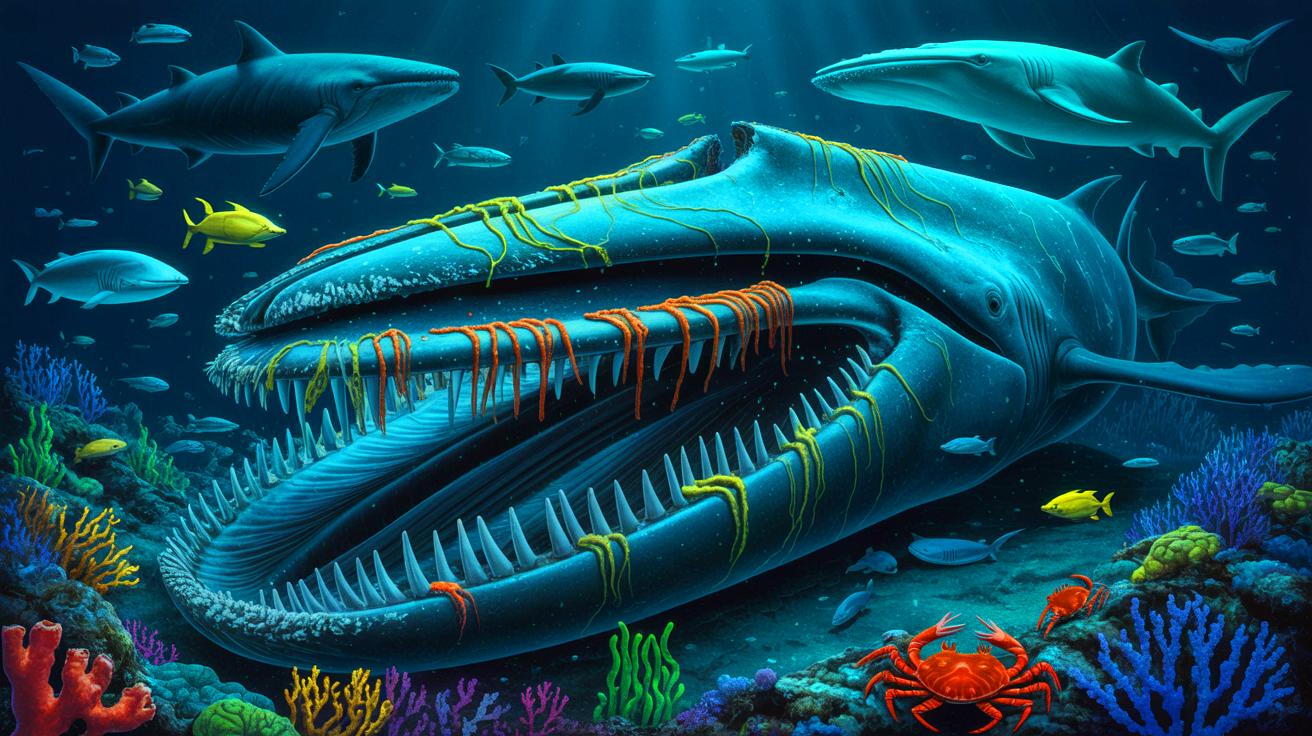
In the vast, enigmatic depths of the ocean, where sunlight never penetrates, a remarkable discovery has emerged. Scientists have unveiled a vibrant ecosystem thriving around the decaying remains of a massive sea creature. This astonishing phenomenon, documented during a 2021 deep-sea mission by the Schmidt Ocean Institute, captures a hidden world teeming with biodiversity. The footage reveals an intricate web of life, fueled by the nutrients provided by the colossal remains. This natural occurrence, known as a whale fall, offers an extraordinary glimpse into the complex interactions and survival strategies of deep-sea organisms.
Whale Falls: Nature’s Underwater Gift That Keeps Giving
When a giant marine creature, such as a whale, meets its end and sinks to the ocean floor, it transforms the seafloor into a bustling hub of activity. Known as a whale fall, this event creates a long-lasting nutrient source that sustains diverse life forms for decades. Initially, scavengers like hagfish, deep-sea sharks, and crabs are attracted by the rich organic matter. These opportunistic feeders quickly consume the soft tissues in the early days of decomposition.
As the flesh is devoured, a new phase begins with microbial decomposers and specialized worms taking center stage. Among these, the Osedax worms are particularly fascinating. Equipped with enzymes, they bore into bones to extract lipids. This marks the second phase of decomposition, where the remaining skeleton becomes a refuge for more obscure life. Over time, whale falls create a complex microhabitat in an otherwise barren environment, showcasing nature’s resilience and adaptability.
A Three-Act Cycle of Life and Decay
The ecological progression of whale falls unfolds in three primary stages. The initial scavenger stage draws larger species that feed on soft tissue, devouring most of the available meat within months. This stage is followed by the decomposer stage, characterized by a bloom of bacterial colonies and bone-eating organisms. The Schmidt Ocean Institute’s 2021 expedition vividly documented this transformation, revealing species that depend entirely on the organic residue found in these fallen giants’ bones.
As bacteria proliferate, they facilitate further tissue breakdown, supporting complex food chains around the whale skeleton. Finally, the remineralization stage ensues. Here, the skeleton releases vital nutrients into the surrounding sediment, attracting bottom-dwelling invertebrates like shrimp, sea snails, and deep-sea corals. This final stage can last decades, underscoring the long-term impact a single carcass can have on a remote ecosystem.
Life on the Edge: An Unlikely Sanctuary
Whale falls are remarkable for the sheer diversity of organisms they attract, many of which are unknown, poorly understood, or completely dependent on this process for survival. In the nutrient-starved deep sea, they act like biological islands, allowing species that would otherwise never encounter each other to coexist. Whale falls function as feeding grounds and nurseries, offering shelter and resources that support breeding populations.
Some species have adapted to rely entirely on whale falls for their life cycle. Deep-sea gastropods, certain species of shrimp, and even corals have been observed clustering around these bone beds. These pockets of life are an evolutionary marvel, showcasing nature’s ability to engineer complex systems in the most desolate regions of the planet. The slow decomposition and long nutrient flow provide researchers with a time-lapse of biological succession and survival strategies.
Signals From the Deep: What Whale Falls Reveal About Ocean Health
Beyond their ecological intrigue, whale falls offer valuable insights into the state of oceanic ecosystems. Occurring in hard-to-access regions, they provide a snapshot of marine health without the noise of human interference. Researchers can study how organic material circulates through deep-sea environments and how nutrients travel within the water column.
One promising area of study is the carbon sequestration potential of whale falls. As these massive creatures decompose, they lock carbon into the seafloor, potentially influencing global carbon cycles. Understanding these natural processes could provide new clues about the ocean’s role in mitigating climate change, offering another reason to protect marine environments from overfishing, pollution, and other human pressures.
As demonstrated by the Schmidt Ocean Institute’s high-resolution documentation, each whale fall is more than an isolated event – it’s a vital cog in the planetary machine, hidden beneath the waves. The implications of these findings extend beyond marine biology, challenging us to consider the interconnectedness of life and the unseen forces that shape our world. What other secrets might the deep ocean hold that could redefine our understanding of life on Earth?
Continue reading