



“See How Humans Defied Nature”: This Discovery Reveals the Hidden Power That Let Our Ancestors Conquer the World (and It Wasn’t Luck)
 By
Kwame Asante
By
Kwame Asante
| IN A NUTSHELL |
|
The story of human migration is one of resilience and adaptability, tracing the journey of Homo sapiens as they ventured out of Africa around 50,000 years ago. Recent research published in the journal Nature sheds light on the factors that enabled this monumental move. The study reveals that the ecological flexibility of early humans played a crucial role in their successful expansion across the globe. By surviving and thriving in a variety of challenging environments, these ancient populations paved the way for the diverse global presence of modern humans today.
The Surprising Discovery of Ecological Flexibility
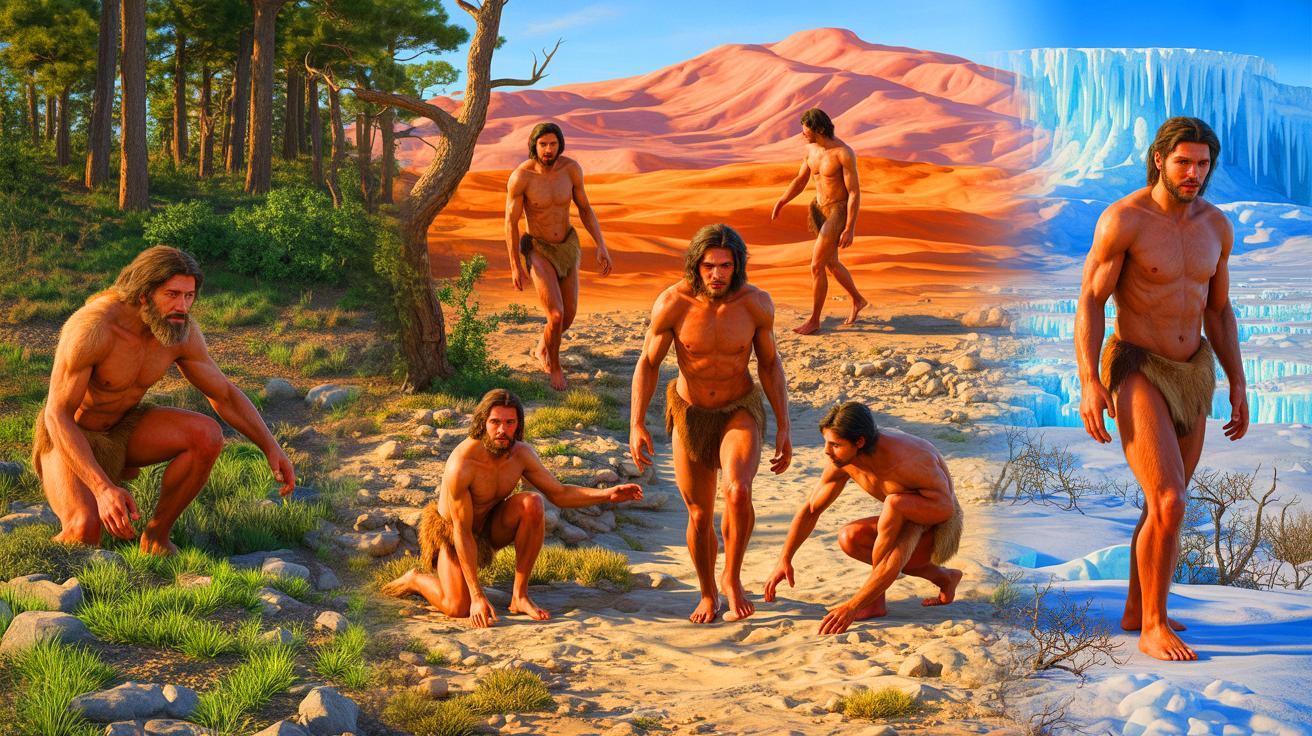
One of the most intriguing revelations from the study is the early display of ecological flexibility by Homo sapiens. Researchers examined archaeological sites from as far back as 120,000 years ago, uncovering evidence of human habitation across diverse climates and terrains in Africa. This finding overturns previous assumptions that early humans were confined to relatively uniform habitats.
By 70,000 years ago, humans were not only surviving but thriving in vastly different environments, including forests, deserts, and regions with extreme seasonal variations. This adaptability was crucial for their eventual migration beyond Africa. As Emily Hallett, co-lead author of the study, noted, humans have been successfully living in challenging habitats for at least 70,000 years, indicating a level of ecological flexibility that allowed them to confront and adapt to new challenges effectively.
“Humans have been successfully living in challenging habitats for at least 70,000 years,” study co-lead author Emily Hallett told Live Science.
https://africatimes.com/they-didnt-flee-abundance-this-ethiopian-discovery-reveals-drought-not-plenty-drove-humanitys-first-great-escape-and-it-changes-everything/365/
This adaptability was not merely about survival; it was a testament to the thriving nature of early humans in environments vastly different from those of their origins.
Ecological Flexibility as the Key to Global Expansion
The ability of Homo sapiens to thrive in diverse environments was a pivotal factor in their successful global spread. When modern humans began their significant dispersal around 50,000 years ago, they migrated into regions with climates starkly different from their African origins. These included the icy tundras of northern Eurasia, where survival would have posed significant challenges.
Andrea Manica, an evolutionary ecologist at the University of Cambridge, described Homo sapiens as the “ultimate generalist,” highlighting their ability to adapt to a wide array of habitats. This adaptability set them apart from other hominin species like Neanderthals and Denisovans, who lacked such ecological versatility. The findings suggest that the evolutionary history of Homo sapiens is marked by a refinement of ecological flexibility, which distinguished them from other species and facilitated their global expansion.
Here’s The Discovery That Shatters Everything You Know About Humanity’s First Home Outside Africa
This adaptability not only influenced human migration but also sheds light on the broader evolutionary history of the genus Homo. It suggests that earlier species, such as Homo erectus, may have also developed adaptive strategies when they left Africa for Eurasia.
The Complex Interaction of Factors Behind Migration Success
The study emphasizes that the ability to expand into challenging habitats was not due to a single evolutionary change. Instead, it resulted from a complex interplay of factors. These included physical adaptability, social dynamics, and cultural innovations that facilitated early humans’ successful migrations.
Michela Leonardi, co-lead author, explained that Homo sapiens’ ecological flexibility was not due to one evolutionary or technological breakthrough. Rather, it emerged from a “complex interaction of many factors,” including larger ranges of human populations, increased contact and cultural exchanges, and a higher likelihood of developing and maintaining innovations. This complexity underscores the role of social and cultural evolution in early human success.
Unlike other species, Homo sapiens developed tools, language, and social networks that enhanced their ability to adapt to new environments. These factors provided the necessary support for survival in previously uninhabitable regions, highlighting the importance of cultural evolution alongside biological adaptability.
Implications for Our Understanding of Human Evolution
The insights from this research have broader implications for our understanding of human evolution. The study suggests that Homo sapiens’ unique adaptability set the stage for the eventual dominance of modern humans across the globe. This ecological flexibility allowed early humans to confront and overcome a variety of environmental challenges, from arid deserts to icy tundras.
The research also prompts a reevaluation of how we view the evolutionary paths of other hominin species. The adaptability observed in Homo sapiens may have been a key differentiator that enabled their survival and success, while other species without such flexibility faced extinction. This understanding of human adaptability can inform current discussions about human resilience in the face of climate change and other global challenges.
The adaptability observed in Homo sapiens may have been a key differentiator that enabled their survival and success.
As we continue to explore the complexities of our past, how will these insights shape our approach to the challenges of the future?
Continue reading