


“Listen to Earth’s Hidden Heartbeat”: This Mysterious Pulse Beneath Africa Is Tearing the Continent Apart (and a New Ocean Is Emerging)
 By
Kwame Asante
By
Kwame Asante
| IN A NUTSHELL |
|
A remarkable discovery has emerged from the depths of the Earth, offering new insights into the geological dynamics beneath Africa. Scientists have identified a rhythmic, pulse-like activity in the Earth’s mantle beneath the Afar region, driven by molten magma. This phenomenon has been likened to a heartbeat and is reshaping our understanding of tectonic processes. As the tectonic plates in this region gradually pull apart, they pave the way for the formation of a new ocean basin. This groundbreaking research, led by geologist Emma Watts and published in Nature Geoscience, highlights the complex interactions between the Earth’s interior and surface, with significant implications for the study of volcanism, earthquakes, and continental breakup.
Understanding the Pulse Beneath Afar
At the core of the recent study is the discovery that the mantle beneath the Afar region is far from static. Instead, it exhibits a dynamic pulse, characterized by distinct chemical signatures. According to Emma Watts, the mantle’s movements are not uniform or stationary, but rather pulse with partially molten materials. These pulses are channeled through the rifting tectonic plates above, influencing the geological processes at play.
This pulse-like activity is critical to understanding the tectonic dynamics in the Afar region. As the tectonic plates slowly separate, they allow molten magma to rise to the surface, leading to volcanic activity and reshaping the Earth’s crust. The implications of this phenomenon extend beyond Afar, providing insights into volcanic behavior and earthquake dynamics in other regions. Watts emphasizes the importance of these findings in rethinking the interactions between the Earth’s interior and surface.
The Formation of a New Ocean Basin
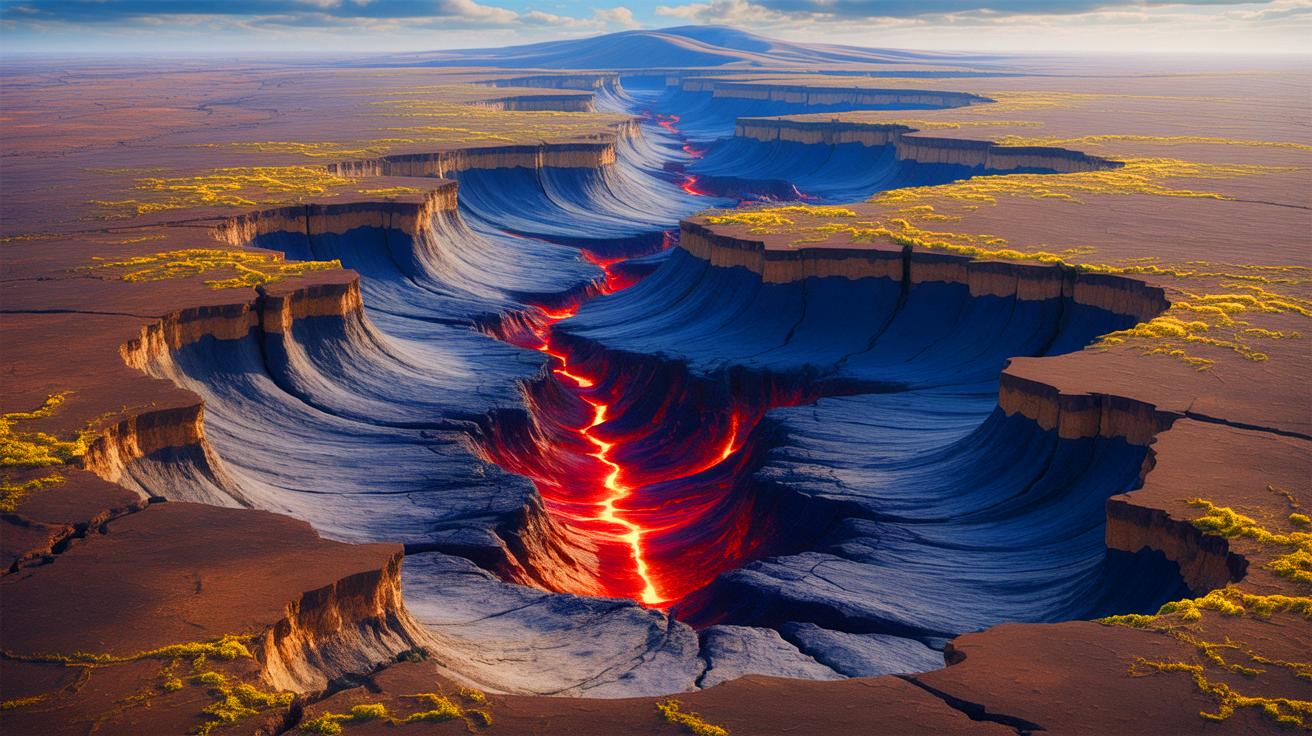
The Afar Triple Junction, where the Arabian, Nubian, and Somalian plates converge, is a geological hotspot of immense significance. Over time, the thinning continental crust in this area will give way to a new ocean basin as the surface drops below sea level. This tectonic activity is part of a larger process of continental breakup, which is still in its nascent stages.
The study highlights the role of mantle plumes in shaping tectonic dynamics. The upwelling of mantle material beneath the plates affects how quickly and efficiently these rifts open. As mantle material rises, it influences the speed at which tectonic plates separate and the intensity of volcanic activity. This makes the Afar region a natural laboratory for studying the formation of new ocean basins and the interactions of tectonic plates during continental breakup.
The Heartbeat of the Earth
One of the most striking aspects of the research is the analogy of the mantle’s pulse to a heartbeat. Geologist Tom Gernon from the University of Southampton describes this phenomenon as chemical striping that suggests a pulsing plume, akin to a heartbeat. The mantle’s pulse is evident in the repeating chemical signatures found across the region, indicating periodic surges of molten material.
These pulsing behaviors are not uniform across the region, but are influenced by the thickness of the tectonic plates and their rate of movement. In faster-spreading rifts, such as the one along the Red Sea, the pulses travel more efficiently, resembling a pulse through a narrow artery. This insight challenges previous assumptions about mantle plumes and emphasizes the connection between mantle upwellings and the dynamics of the overlying plates.
Implications for Volcanism, Earthquakes, and Continental Breakup
The discovery of rhythmic pulses beneath Afar has far-reaching implications for our understanding of geological phenomena. Derek Keir, a geophysicist at the University of Southampton, notes the intimate connection between deep mantle upwellings and plate motion. This discovery reshapes our interpretation of surface volcanism, earthquake activity, and continental breakup processes.
The study reveals that mantle plumes do not simply rise vertically but can flow beneath tectonic plates, concentrating volcanic activity where plates are thinnest. This finding could enhance predictions of future volcanic eruptions and their intensity. Keir’s remarks underscore the potential for new research avenues, exploring the dynamic interactions between the Earth’s mantle and tectonic plates.
The recent findings about the Earth’s mantle pulse beneath Africa open new doors for understanding our planet’s dynamic processes. As researchers continue to explore these interactions, questions arise about how this knowledge will influence our predictions of geological events, such as volcanic eruptions and earthquakes. What further revelations might emerge as we delve deeper into the Earth’s mysteries and their impact on the surface we inhabit?
Continue reading