


“Watch What’s Splitting Africa Apart”: This Giant Crack Is Opening a New Ocean (and It’s Happening Faster Than Scientists Ever Believed)
 By
Joseph Mwangi
By
Joseph Mwangi
| IN A NUTSHELL |
|
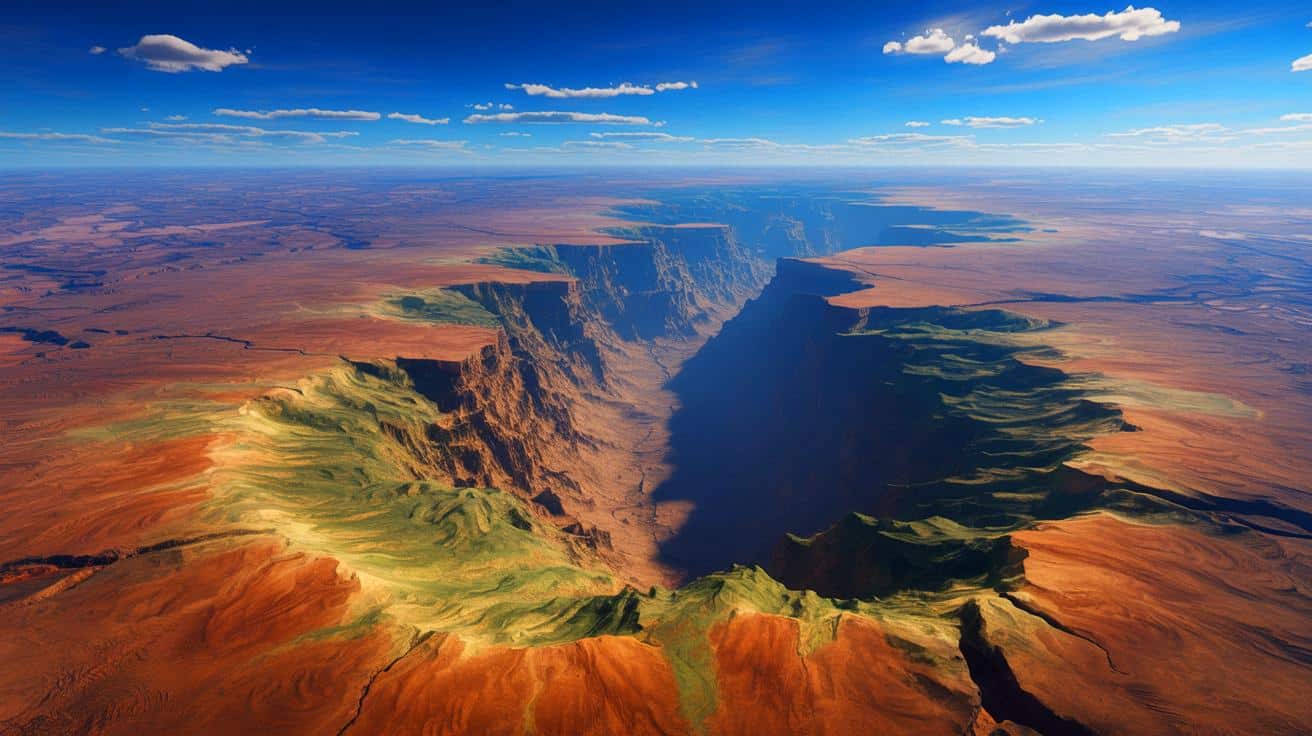
East Africa is undergoing a remarkable transformation, driven by tectonic forces deep beneath its surface. The East African Rift System, spanning from the Red Sea to Mozambique, is gradually pulling apart, with the potential to reshape the continent’s geography. This process, once believed to occur over millions of years, is now happening at an accelerated pace. Scientists are closely observing this geological phenomenon, which could eventually lead to the birth of a new ocean. The implications of this shift are profound, affecting both the region’s physical landscape and its geopolitical future.
The Rift That’s Changing Africa
The East African Rift System, a boundary between the African and Somali tectonic plates, stretches from the Red Sea in the north to Mozambique in the south. This geological feature represents a significant divide, where plates are separating at a rate of about 0.3 inches per year. While this pace might seem slow, it is sufficient to instigate geological events like volcanic eruptions and earthquakes, which could hasten the rifting process.
In the Afar region of Ethiopia, the rift’s impact is particularly visible. This area, where the African, Somali, and Arabian plates converge, offers a rare glimpse into the real-time splitting of a continent. Historically, the rift has been a part of East Africa’s geological narrative, but recent observations suggest the separation may occur more rapidly than previously thought. The Afar region’s unique position allows scientists to study and understand these tectonic movements with unprecedented clarity.
A Massive Crack Opens in the Desert
In 2005, a dramatic event unfolded in Ethiopia’s Afar region. Over several weeks, a 35-mile-long crack appeared, accompanied by more than 420 earthquakes. This rift, with depths reaching up to 33 feet, provided significant insights into tectonic activities. The rapid development of this crack challenged prior geological models, revealing that processes believed to span millions of years might occur in mere centuries.
The sudden appearance of this crack has prompted geologists to revisit their understanding of tectonic dynamics. It underscores the potential for rapid geological changes, reshaping the timeline of such transformations. The 2005 rupture serves as a pivotal example of how quickly tectonic movements can progress, offering new perspectives on continental drift and the forces shaping our planet.
The Birth of a New Ocean
As the East African Rift System continues to expand, the region is gradually being pulled away from the continent. Experts anticipate that over millions of years, the Horn of Africa will separate, forming an island surrounded by a new ocean. Although this process is slow, its effects are already visible, with deep valleys and rugged terrain emerging across the landscape.
This transformation holds significant implications for the countries within the rift region, including Somalia, Djibouti, and Kenya. A future where these nations are separated by water presents both challenges and opportunities. New coastlines could foster economic growth through expanded trade routes, especially for landlocked countries like Zambia and Uganda. The potential for increased economic activity underscores the importance of understanding and adapting to these geological changes.
Geological Forces at Play
The rifting process in East Africa is characterized by a series of dramatic bursts, driven by subterranean pressures. The 2005 rupture, for instance, was likely triggered by rising magma beneath the Earth’s crust, leading to a significant geological event. This rifting occurs in a unique setting where three tectonic plates – the Nubian, Somali, and Arabian – meet. Each plate moves at varying speeds, with the Arabian plate separating from Africa at about one inch annually, while the Nubian and Somali plates diverge at a slower pace of 0.2 to 0.8 inches per year.
The combined movement of these plates is gradually forming a mid-ocean ridge, where new oceanic crust is developing. This ridge signifies the early stages of a new ocean, highlighting the dynamic and complex nature of Earth’s geological processes. Understanding these forces provides valuable insights into the planet’s evolving landscape and the potential implications for future generations.
As East Africa continues to transform, the potential birth of a new ocean raises intriguing questions about the future of the region. How will these geological changes impact the continent’s geopolitical landscape, and what opportunities might arise from this monumental shift? The answers to these questions will shape the narrative of East Africa for centuries to come.
Continue reading