



South Africa Reveals Game-Changing Lunar Mission With China That Terrifies Space Giants Worldwide
 By
Joseph Mwangi
By
Joseph Mwangi
| IN A NUTSHELL |
|
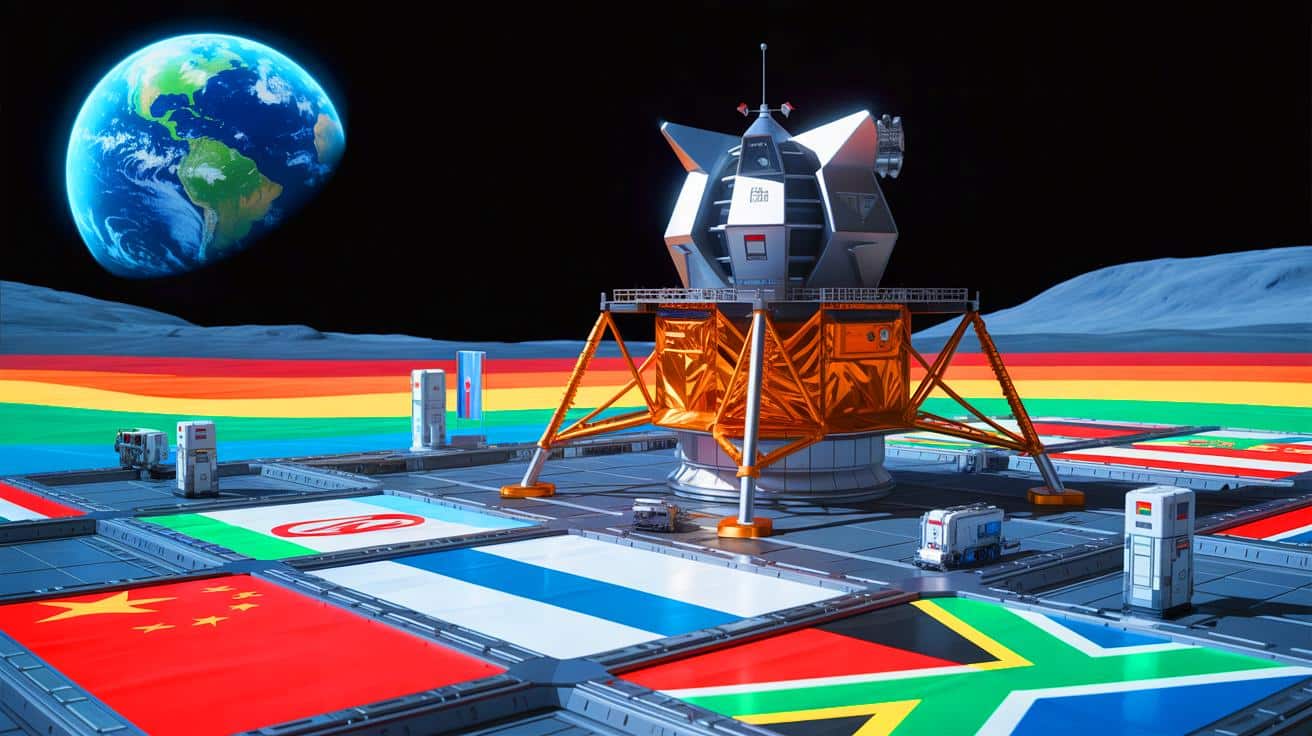
South Africa has officially joined China’s International Lunar Research Station (ILRS) project, aiming to establish a permanent base on the Moon by the next decade. This collaboration marks a significant step in international space exploration, showcasing the growing influence of China in global space initiatives. The project promises to foster scientific research and technological advancements and is part of a broader trend of nations and organizations working together to explore and utilize lunar resources. As the world watches this ambitious endeavor unfold, the question remains: how will this international collaboration shape the future of space exploration?
South Africa Joins China’s Lunar Initiative
On September 1st, a notable agreement was made between China and South Africa, signaling South Africa’s official entry into the ILRS project. This initiative, spearheaded by China, aims to construct a permanent lunar base by the 2030s. The agreement was signed by Chen Xiaodong, the Chinese Ambassador to South Africa, and Humbulani Mudau, CEO of the South African National Space Agency (SANSA). This collaboration followed bilateral space cooperation agreements during Chinese President Xi Jinping’s state visit to South Africa on August 22nd.
The ILRS project seeks to create a lunar base similar to the United States’ Artemis program, with both initiatives eyeing potential sites on the Moon. South Africa’s involvement highlights its commitment to advancing its space exploration capabilities and contributing to global scientific research. The collaboration is seen as a strategic move to enhance South Africa’s technological landscape and foster international partnerships.
China’s Leadership and the Role of ILRSCO
Initially, the ILRS project was to be co-led by China and Russia, with a joint roadmap released in 2021. However, following geopolitical tensions due to Russia’s invasion of Ukraine, China has assumed a more dominant role, while still seeking international cooperation. To coordinate this massive initiative, China is establishing the International Lunar Research Station Coordination Organization (ILRSCO).
The ILRSCO headquarters will be located in the Deep Space Science City in Hefei, Anhui Province. This facility will provide essential infrastructure for design simulations, operational control, and data management. By bringing together various countries and organizations, China aims to create a collaborative platform that will drive innovation and scientific discovery on the lunar surface.
International Partnerships and Objectives
Beyond South Africa, several other countries and organizations have committed or are planning to join the ILRS project. This includes Venezuela, the Asia-Pacific Space Cooperation Organization (APSCO), Swiss company nanoSPACE AG, the International Lunar Observatory Association (ILOA), and Pakistan. China aims to finalize these agreements by October, further expanding the project’s international reach.
The lunar base’s main objectives include conducting multidisciplinary and versatile research related to the exploration and exploitation of the Moon. By leveraging the expertise of various partners, the project aims to advance our understanding of lunar resources, promote technological innovation, and foster peaceful international cooperation in space.
This Shocking Discovery Reveals Earth’s Secret Plan To Split Africa And Change Our World Forever
Future Missions and Technological Innovations
China has outlined a series of robotic missions as precursors to the ILRS initiative. These missions are designed to “prepare the ground” for the large-scale operations necessary to establish the lunar base. A key mission in this series is Chang’e-8, which will test 3D printing technologies using lunar regolith. This mission represents a significant technological advancement, as it aims to utilize local materials for construction on the Moon.
Following these preliminary missions, China plans to launch five major infrastructure missions using super-heavy launch vehicles in the 2030s. Initially robotic, the lunar base will eventually host astronauts, marking a new era of human presence on the Moon. These developments highlight the increasing capabilities of China’s space program and its ambition to lead in lunar exploration.
As China and its international partners move forward with the ILRS project, the global space community watches with keen interest. The collaboration between diverse countries and organizations holds promise for scientific breakthroughs and technological advancements. Yet, it also raises questions about the geopolitical dynamics of space exploration. How will these international partnerships influence the future of space governance and cooperation?
Continue reading