



“This Static Image Moves”: The Optical Illusion That Tricks Your Brain, Dilates Your Eyes, and Exposes Hidden Secrets of Perception
 By
Kwame Asante
By
Kwame Asante
| IN A NUTSHELL |
|
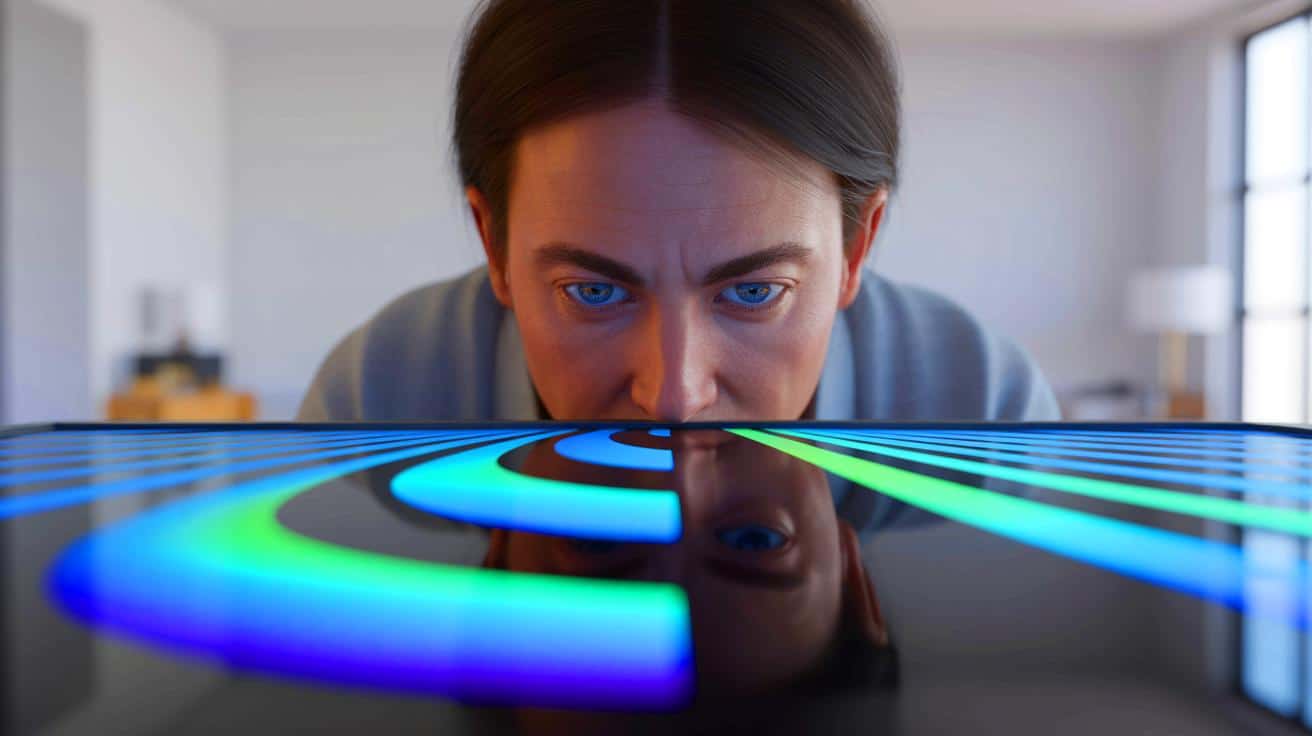
In the realm of visual perception, an intriguing optical illusion has captivated both scientists and the general public alike. Known for its ability to evoke physical reactions in many viewers, this illusion has left researchers scratching their heads. A static image that appears to pulsate or expand, it offers more than just a curious visual trick. For most people, the illusion prompts the pupils to dilate, mimicking the eye’s response to entering a darker environment. However, roughly 20% of individuals remain unaffected, experiencing no change in perception or pupil size. This phenomenon raises intriguing questions about human perception and the brain’s interpretation of visual stimuli.
The Science Behind the Illusion
Unlike typical optical illusions that rely on visual misperceptions, this particular illusion activates a deeper physiological response. Researchers at the University of Oslo explored this phenomenon in a study published in Frontiers in Human Neuroscience. Led by Dr. Bruno Laeng, the team utilized infrared eye-tracking technology to measure changes in pupil size among 50 participants exposed to the illusion. The findings were striking: when participants viewed a black hole against a white background, their pupils dilated as if they were entering a low-light environment. This involuntary response suggests that the brain is simulating a darker scenario, even though the physical surroundings remain unchanged.
Intriguingly, when the illusion was modified with colors such as green, red, cyan, or white, participants’ pupils constricted, reflecting an anticipation of increased brightness. The participants also rated the intensity of the illusion, and those who experienced it more vividly displayed stronger physiological reactions. These results highlight a fascinating link between subjective perception and physiological response, where the brain’s interpretation of visual stimuli influences the body’s reactions.
Why Some People Are Unaffected
Despite the illusion's widespread impact, approximately 20% of individuals experience no effect. Their pupils remain unchanged, and they report no sensation of expansion. This variability among participants was unexpected, especially given the study's precise measurements. Researchers ruled out common explanations such as vision problems or attention deficits, suggesting that the difference may be rooted in the brain's construction of visual reality.
One theory proposes that the brain constantly predicts what will occur milliseconds into the future to compensate for neural delays - a process known as "perceiving the present." In this case, the illusion might serve as an internal compensation mechanism, preparing individuals to move forward into a darker space, even if their physical environment remains unchanged. Understanding why some individuals are immune to this illusion could provide valuable insights into the brain's predictive mechanisms and its role in shaping perception.
Implications for Neuroscience
This study adds to a growing body of research examining the influence of optical illusions on both perception and physiology. Previous studies, such as those conducted by Laeng and Endestad in 2012 and Suzuki et al. in 2019, have demonstrated similar effects with bright illusions, where the eyes constrict in response to perceived brightness, even in the absence of actual light. These findings underscore the adaptive nature of the visual system, which is finely tuned not only to reality but also to anticipated changes in the environment.
The practical implications of this research extend beyond academic curiosity. The illusion has potential applications in studying neurodivergent perception and understanding conditions where visual processing deviates from the norm. Additionally, it highlights the brain's reliance on prior experiences and environmental expectations in constructing visual reality. As public interest in perception experiments grows, fueled by viral internet phenomena, this illusion offers a glimpse into the brain's complex storytelling capabilities, even when the story doesn’t match reality.
Future Directions in Visual Perception Research
As the scientific community continues to explore the intricacies of human perception, this optical illusion serves as a compelling case study. The phenomenon challenges our understanding of how the brain interprets visual information and emphasizes the role of prediction in constructing reality. Future research could investigate the neural mechanisms underlying this illusion and explore why certain individuals are unaffected.
Moreover, the potential applications of this research are vast, from enhancing our understanding of sensory processing disorders to developing new approaches in visual rehabilitation. As we delve deeper into the mysteries of perception, we must consider how these findings could impact our understanding of the human brain. What other hidden mechanisms might be at play in shaping our perception of the world around us?
Continue reading