


Chinese Researchers Reveal Ocean Floor Discovery That Shatters Everything We Know About Earth’s Hidden Secrets
 By
Nomvula Dlamini
By
Nomvula Dlamini
| IN A NUTSHELL |
|
The depths of the ocean have long intrigued scientists, offering a glimpse into some of the most mysterious and uncharted territories on Earth. Recently, Chinese researchers have made a groundbreaking discovery that challenges our understanding of life in the ocean’s deepest recesses. By exploring the Mariana Trench, they have uncovered organisms thriving at astonishing depths, forcing a reevaluation of the limits of life. This discovery not only redefines our biological boundaries but also opens new avenues for scientific exploration and environmental conservation.
Life Beyond the Known Limits
The Mariana Trench, a profound underwater chasm in the Pacific Ocean, has always held an air of mystery due to its extreme conditions. At its deepest point, the Challenger Deep, the trench extends over 7 miles below sea level, a place previously considered too hostile for complex life. Earlier beliefs held that only simple, microscopic organisms could survive such intense pressure and frigid temperatures. However, the findings from the Chinese expedition aboard the submersible Fendouzhe have shattered these assumptions.
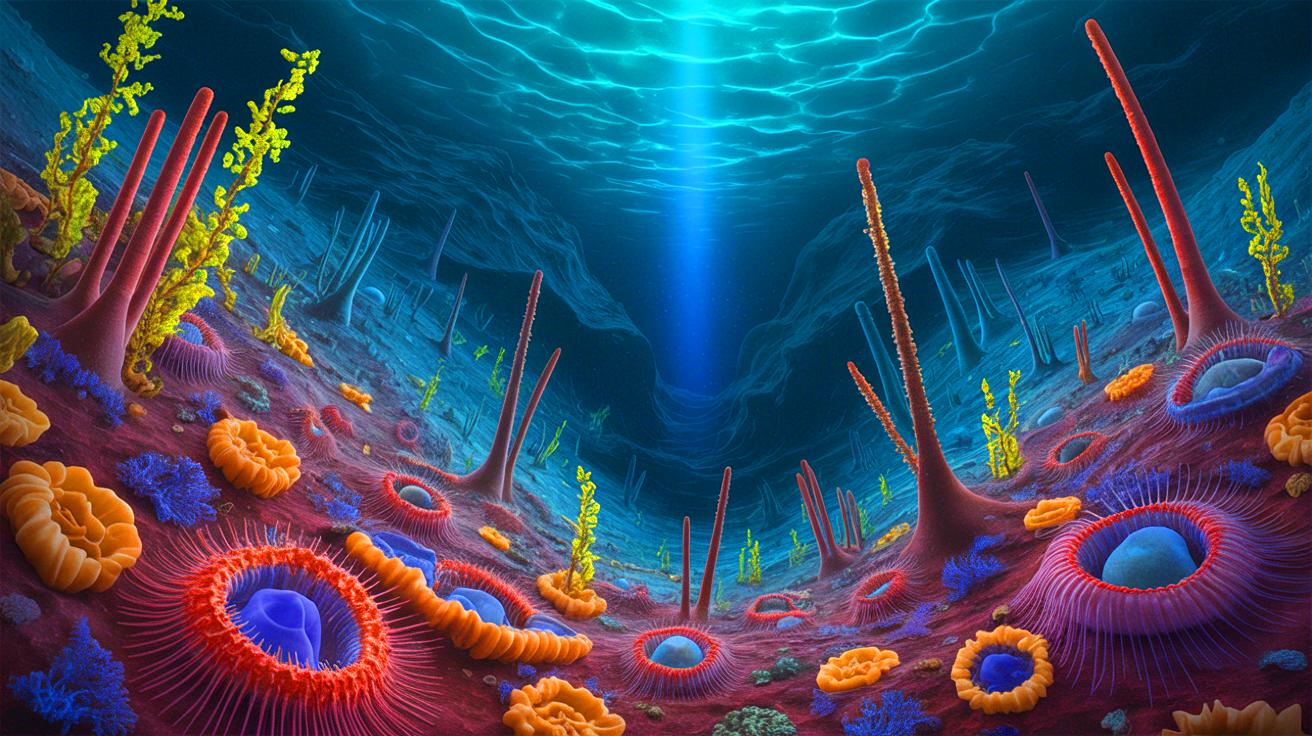
The researchers encountered thriving communities of life forms, including tubeworms, mollusks, and sea cucumbers. These organisms, some measuring up to a foot in length, defy the conventional understanding of life’s limits. The presence of such complex life at these depths suggests that the ocean holds more secrets than previously thought. This revelation compels scientists to reconsider the potential for life in extreme environments, both on Earth and beyond.
Survival Through Chemotrophy
A key to the survival of these deep-sea organisms is their unique ability to harness energy through chemotrophy. Unlike most life forms that rely on sunlight for energy via photosynthesis, these creatures derive energy from chemical reactions. The absence of sunlight in the deep ocean has led these organisms to exploit compounds like methane and sulfur that seep from Earth’s crust through hydrothermal vents.
These vents, rich in minerals and chemicals, create a niche environment where life can thrive without sunlight. The organisms discovered by the Chinese team have adapted to utilize these resources effectively, showcasing the incredible adaptability of life. This discovery highlights the diverse strategies life employs to survive in harsh, inhospitable conditions and underscores the importance of studying these unique ecosystems.
Challenging Our Understanding of Life’s Limits
The presence of life at depths exceeding 10,000 meters challenges the preconceived limits of life’s endurance. If organisms can survive and even prosper in such extreme conditions, it raises intriguing possibilities about life in unexplored regions of our planet and beyond. This discovery prompts a reevaluation of where life might exist, pushing the boundaries of our exploration to include other planets and moons.
The study also draws attention to the need for conservation. As the potential for deep-sea mining grows, there is an urgent call to protect these fragile ecosystems. The environmental implications of disturbing these habitats could be significant, affecting not only the organisms that call them home but also the broader ecological balance. This newfound knowledge supports the argument for cautious and informed decision-making regarding deep-sea exploitation.
Implications for Future Exploration
The findings from the Mariana Trench expedition have profound implications for future scientific exploration. They suggest that life is more adaptable and resilient than previously understood, capable of thriving in the harshest of environments. This adaptability may hint at similar ecosystems on other celestial bodies, encouraging the search for extraterrestrial life.
In light of these discoveries, the scientific community is urged to prioritize the exploration and conservation of deep-sea ecosystems. The potential for new biological insights and the need for environmental stewardship are compelling reasons to continue these efforts. As we deepen our understanding of Earth’s final frontiers, the lessons we learn could shape our approach to exploring other worlds.
The remarkable discovery of life at extreme depths in the Mariana Trench challenges our understanding of biology and the resilience of life. It opens new avenues for scientific inquiry and emphasizes the importance of preserving Earth’s untouched ecosystems. As we ponder these revelations, one question remains: what other secrets does the ocean hold, waiting for us to uncover?
Continue reading