

Forgotten Mechanical Volcano Erupts After 250 Years, Revealing Ingenious Engineering and Sparking Historical Curiosity
 By
Kwame Asante
By
Kwame Asante
| IN A NUTSHELL |
|
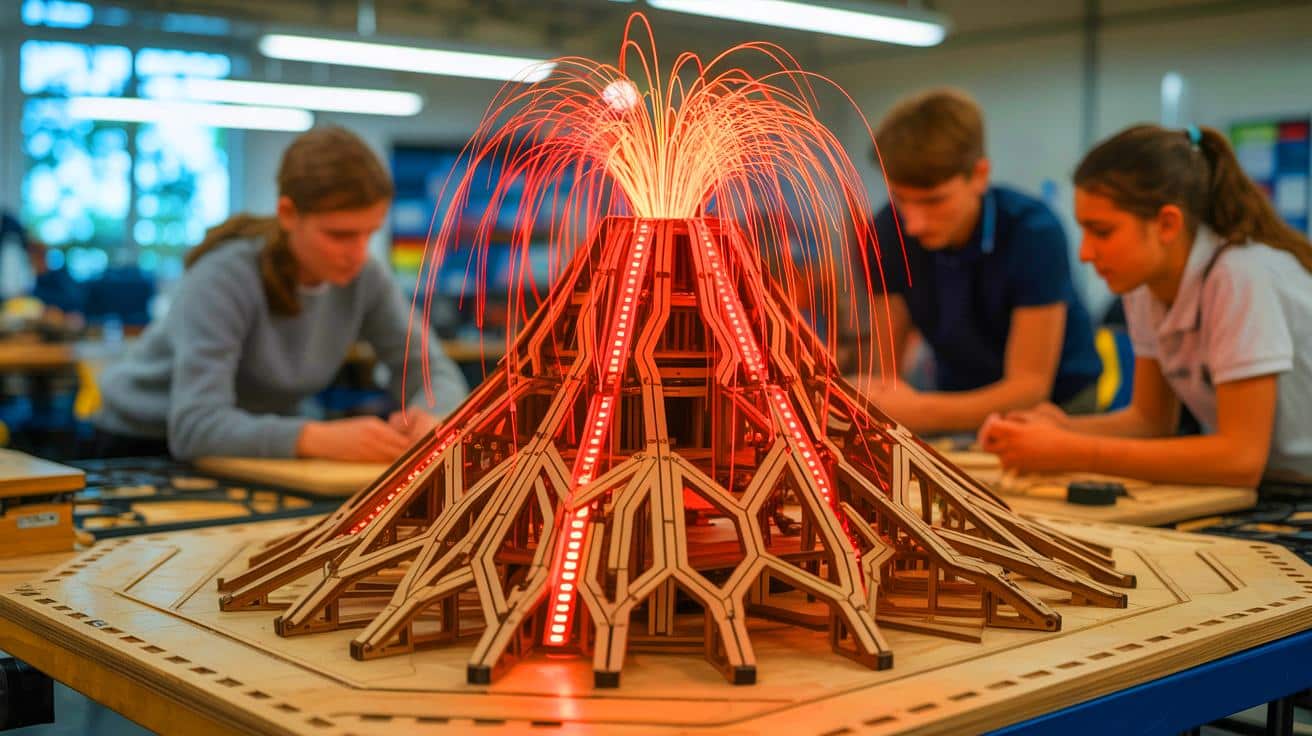
In an extraordinary confluence of history and modern innovation, a mechanical volcano originally envisioned in the 18th century has been brought to life by a group of dedicated students. Once a mere sketch, this ambitious project was reimagined and constructed by students from the University of Melbourne. Their work not only honors the original visionary, Sir William Hamilton, but also showcases how a blend of historical insight and contemporary technology can create something truly remarkable. This resurrection of an old dream speaks volumes about the enduring fascination with nature’s dramatic displays and the unyielding human curiosity that leads to groundbreaking projects.
Reawakening a Vision From the Age of Enlightenment
The 18th century was a time of great curiosity and exploration, and Sir William Hamilton was at the forefront as a British ambassador with a keen interest in volcanology. Captivated by Mount Vesuvius, Hamilton envisioned a mechanical device that would mimic its awe-inspiring eruptions. Though his dream never materialized in his lifetime, it was kept alive through detailed sketches found in the Bordeaux Municipal Library. Today, the University of Melbourne students have transformed these sketches into reality, creating a mechanical volcano that successfully captures the breathtaking essence of Vesuvius.
The project is a testament to the lasting intrigue of natural phenomena and the creative ways humans seek to understand them. Dr. Richard Gillespie, overseeing the project, emphasized its significance as a tool for science communication, highlighting how it bridges the gap between past scientific curiosity and modern engineering prowess.
Engineering Sparks: Merging Past Mechanics With Modern Minds
The revival of Hamilton’s vision was not merely a straightforward technical undertaking. It was a complex journey that required meticulous attention to design and engineering precision. Xinyu (Jasmine) Xu and Yuji (Andy) Zeng, the masterminds behind the reconstruction, faced numerous challenges that mirrored those Hamilton might have encountered. Their efforts were rewarded as they navigated these challenges, learning and applying skills in programming, soldering, and physics.
In The Creator Space workshop, the students used cutting-edge tools like laser cutters and 3D printers to fabricate elements that would traditionally have been impossible to construct. The end result was a mechanical marvel that not only simulates an eruption but also embodies the inventive spirit of the Enlightenment era.
Collaboration as the Core of Innovation
Central to the project’s success was the spirit of collaboration. With guidance from research engineer Andrew Kogios, the students worked as a cohesive unit, combining their knowledge and skills to overcome various technical hurdles. This mentorship was crucial, as Kogios provided insight and expertise that enriched the students’ learning experience, preparing them for future engineering challenges.
The mechanical volcano now stands as the highlight of The Grand Tour exhibition at Melbourne’s Baillieu Library. It serves as a vivid demonstration of how historical concepts can be revitalized through modern technology, offering spectators a glimpse into the past through the lens of today’s innovations.
The Future of Historical Innovation
As the mechanical volcano becomes a centerpiece of the exhibition, it invites viewers to ponder what other historical dreams might yet be realized with today’s technology. The project underscores the value of revisiting and reimagining the past, encouraging a dialogue between different eras of knowledge and creativity. It raises the question of what other forgotten or unrealized innovations could be brought to life with contemporary tools and collaborative efforts.
As visitors admire the melding of Enlightenment thought and modern engineering at the Baillieu Library, they are prompted to consider: What other forgotten visions from history could be revived to inspire future generations?
Continue reading