
“They’re Exploding From Beneath the Ice”: Scientists Confirm Methane Eruptions Are Behind Siberia’s Massive Craters
 By
Kwame Asante
By
Kwame Asante
| IN A NUTSHELL |
|
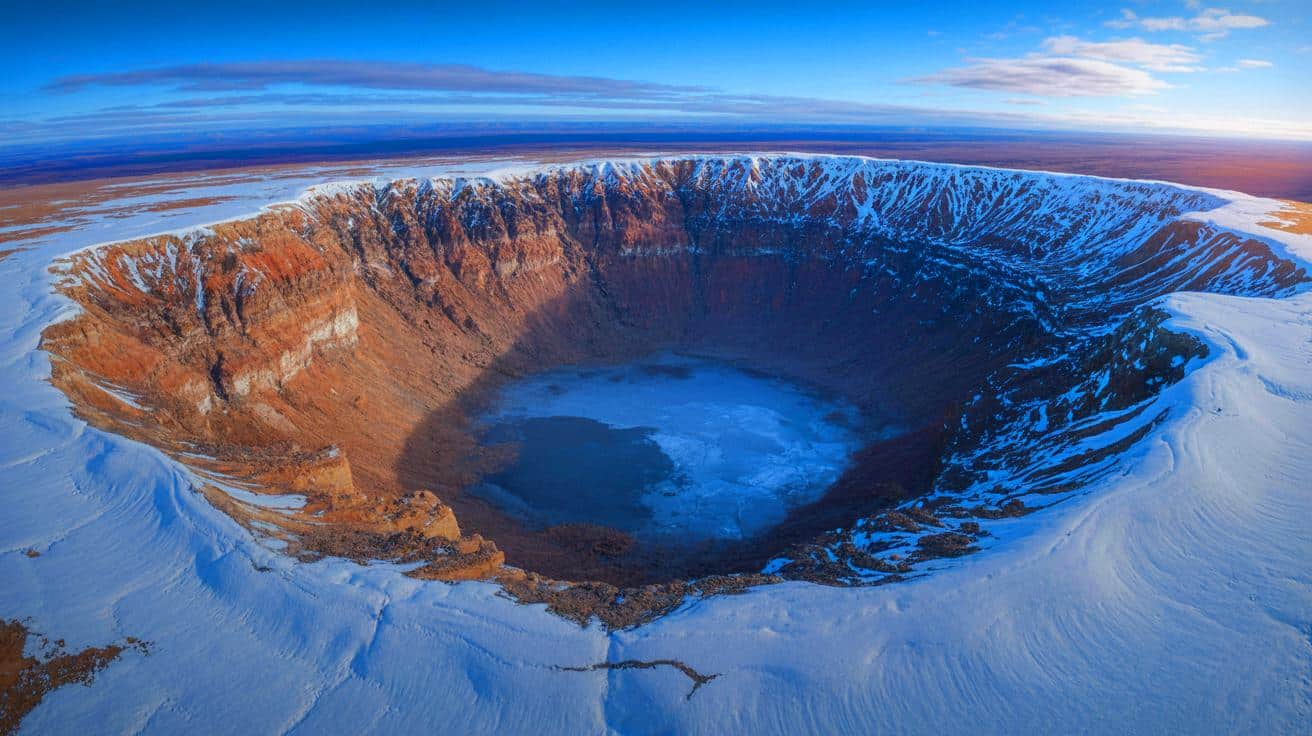
In the remote expanses of Siberia, towering craters have puzzled scientists and locals alike. These massive geological features, known as gas-emission craters (GECs), first appeared in 2014 on the Yamal and Gydan peninsulas. With their steep walls and impressive depth, these craters have sparked numerous theories about their origins. Recent research led by the University of Oslo, in collaboration with Russian scientists, has provided new insights into the causes of these mysterious formations. The study suggests that the combination of thawing permafrost and the release of methane gas from deep underground is the driving force behind these explosive events.
The Mysterious Craters of Siberia
The craters in question are dramatic geological formations, featuring rocky cylinders that plunge as deep as 538 feet and stretch up to 98 feet in diameter. Since their discovery, only eight such craters have been documented, yet their sheer scale has captivated the scientific community. These craters are lined with layers of permafrost, adding to the intrigue surrounding their formation. Initially, some researchers proposed that these craters were the result of warming permafrost, which creates pockets of liquid salt water known as cryopegs. These cryopegs can expand and form cavities, leading to the creation of gas-filled chambers.
However, this explanation did not account for the fact that such craters have only appeared in western Siberia. If surface-level processes were responsible, similar craters would likely be found throughout the Arctic. This discrepancy fueled further investigation into the underlying causes of these explosive formations. The latest research shifts the focus from surface phenomena to deeper geological processes involving methane gas and fault lines beneath the permafrost.
Uncovering the Role of Methane and Fault Lines
The Yamal and Gydan peninsulas are situated on vast gas reserves, with fault lines running through the underlying rock. According to the research team, these fault lines facilitate the movement of gas and heat from deep below the surface. Where these fault lines intersect with lakes and rivers, the frozen ground is thinned by taliks, which are areas of year-round unfrozen soil. These weak points make the frozen “cap” susceptible to sudden rupture when sufficient gas pressure builds up. This process results in the formation of near-vertical shafts that eventually fill with water and ice, transforming into thermokarst lakes over time.
The study’s findings suggest that the power driving these craters is not from shallow cavities but rather from larger underground cavities or accumulations of methane pushing upward. This gas pressure builds until it overcomes the resistance of the overlying permafrost, causing a violent release of energy. This mechanism explains the depth and scale of the craters, as well as the debris that is scattered across the landscape following an explosion.
The Impact of Climate Change
While climate change is not the direct cause of these explosive events, it plays a significant indirect role. As the climate warms, lakes and thawed zones become more prevalent, weakening the frozen ground along fault lines. This makes the permafrost more susceptible to rupture when subjected to the pressure of rising methane gas. Additionally, each crater releases a concentrated amount of methane into the atmosphere, contributing to the greenhouse effect and exacerbating global warming.
This creates a feedback loop where gas releases add to climate change, which in turn accelerates the thawing of permafrost and the formation of more gas-fueled craters. The study highlights the complex interplay between natural geological processes and anthropogenic climate change, underscoring the need for a deeper understanding of these interactions.
Future Implications and Research
The research conducted by the University of Oslo and its collaborators marks a significant advancement in our understanding of gas-emission craters. It builds on previous studies that identified thawing permafrost, salty cryopeg layers, and methane hydrates as potential triggers. However, the latest findings emphasize the role of deeper gas rising along fault lines. This new perspective suggests that gas-emission craters could potentially form in other regions with similar geological conditions, provided there is a connection to natural gas generation and accumulations below continuous permafrost.
The implications of this research extend beyond Siberia, prompting scientists to consider the potential for similar phenomena in other parts of the world. As the climate continues to change, understanding the dynamics of these craters is crucial for predicting future geological events and their impact on the global environment.
The study of Siberia’s gas-emission craters offers a compelling glimpse into the complexities of Earth’s geological processes and the influence of climate change. As researchers continue to unravel the mysteries of these formations, new questions emerge about the potential for similar events elsewhere. How might these findings influence our approach to monitoring and mitigating the impacts of climate change on geological phenomena worldwide?